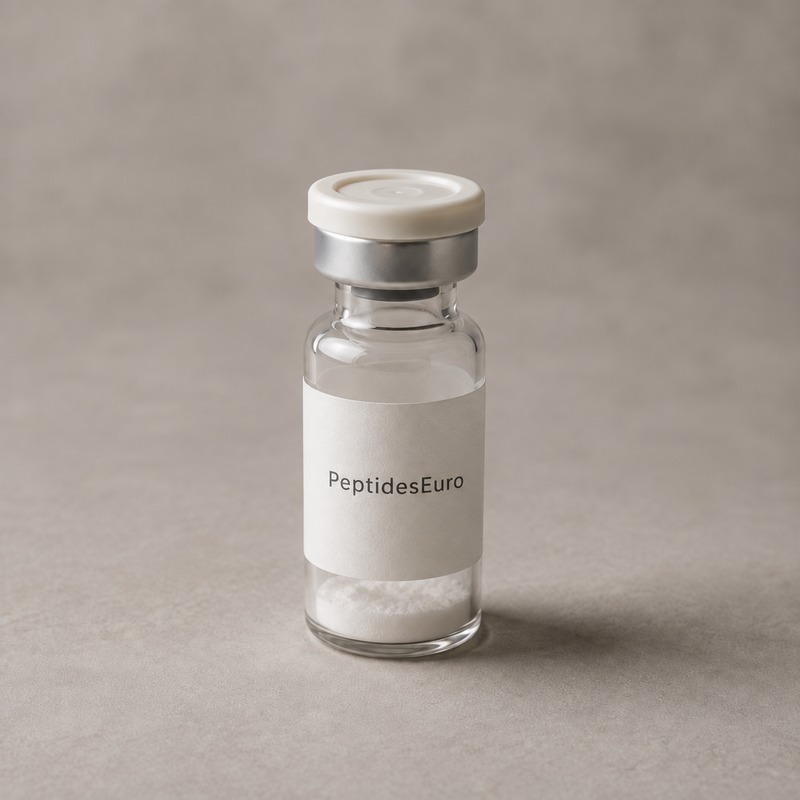
What are peptides?
Short chains of amino acids linked by peptide bonds. Many act as signalling molecules in living organisms.
Learn more: What are peptides?

What peptides are, how they are made and studied, and why batch documentation matters in research.
Short chains of amino acids linked by peptide bonds. Many act as signalling molecules in living organisms.
Learn more: What are peptides?
Peptides built in a laboratory, one amino acid at a time, to match a defined sequence.
Learn more: What are synthetic peptides?
Laboratory, animal and clinical studies examine what a sequence does and at which concentrations.
Learn more: How are peptides studied?
Most compounds in the catalogue are not approved medicines. They are sold for laboratory research only.
Learn more: What is their regulatory status?
Identity and purity can vary between batches and manufacturers. Documentation records what was measured for a specific batch.
Learn more: Why does batch documentation matter?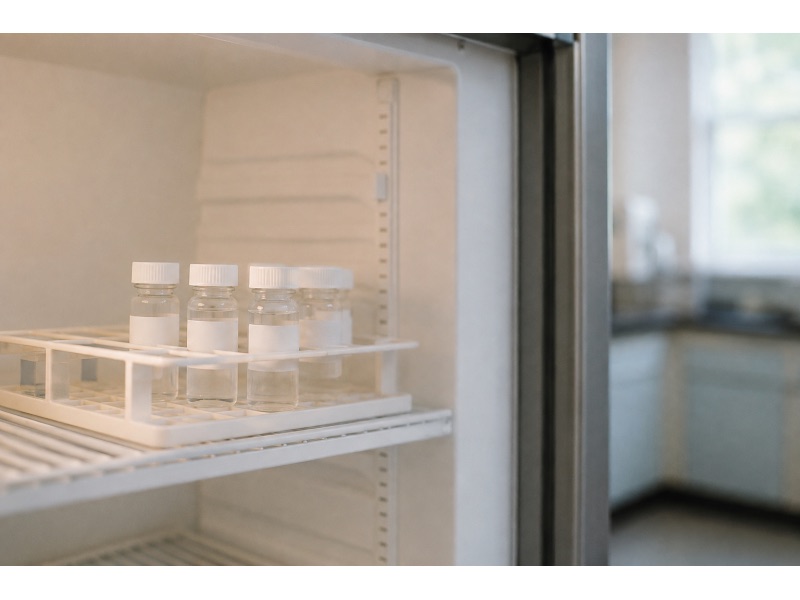
Products are intended for in-vitro and laboratory research. They are not for human or veterinary use.
Learn more: What does “research use only” mean?
A peptide is a chain of amino acids joined by peptide bonds. By convention, chains of roughly 2 to 50 amino acids are called peptides; longer chains that fold into stable three-dimensional structures are usually called proteins. The boundary is a convention rather than a strict rule.
The order of the amino acids, the sequence, determines a peptide’s chemical properties. Small changes, such as replacing a single amino acid or modifying one end of the chain, can change how stable the molecule is and how it interacts with receptors or enzymes.
Many peptides occur naturally. Hormones such as insulin and oxytocin, and many signalling and antimicrobial molecules, are peptides. This is why peptides are widely studied in biochemistry, pharmacology and cell biology.
General educational information. It is not medical, legal or regulatory advice.
Most research peptides are made by solid-phase peptide synthesis (SPPS). The chain is built step by step on a resin support: each amino acid is coupled, its protecting group is removed, and the cycle repeats until the full sequence is assembled.
The finished peptide is cleaved from the resin, purified, commonly by preparative HPLC, and usually freeze-dried (lyophilised) into a powder, which is more stable for storage and transport than a solution.
Synthesis can leave related impurities, such as chains missing one amino acid or still carrying a protecting group. Purification and analytical testing are used to reduce and measure them.
General educational information. It is not medical, legal or regulatory advice.
Research usually starts in vitro: binding assays, enzyme assays and cell cultures show whether a peptide interacts with a target and at which concentration an effect appears.
Compounds of interest may then be studied in animal models to look at stability, distribution and effects in a whole organism. Only a small share of compounds go on to clinical trials in humans, which follow regulated phases and ethical review.
Findings from one model do not automatically apply to another. When reading a study, check the model, the concentrations, the number of samples and whether the results have been reproduced.
General educational information. It is not medical, legal or regulatory advice.
Some peptides are authorised medicines: they have completed clinical trials and have been approved by a regulator, such as the European Medicines Agency, for specific uses, doses and formulations.
Most compounds in this catalogue have no such approval. They have not been assessed by a regulator as safe or effective for any use in people or animals, and they are offered as research chemicals for laboratory work only.
Rules for research chemicals differ between countries and can change. Researchers are responsible for checking the requirements that apply to their institution and location.
General educational information. It is not medical, legal or regulatory advice.
Two vials labelled with the same compound name are not necessarily identical. Synthesis and purification differ between manufacturers and between production runs, so identity, purity and peptide content can vary.
Batch documentation, such as a certificate of analysis, records the methods and results for one specific lot, for example HPLC for purity and mass spectrometry for identity. Linking results to a lot number makes experiments traceable and easier to reproduce.
When a document is provided, check that its lot number matches the vial, which methods were used and when the analysis was carried out. If you need documentation for a particular product, contact us before ordering.
General educational information. It is not medical, legal or regulatory advice.
“Research use only” (RUO) means a product is supplied for laboratory research, for example in-vitro experiments, analytical work or method development.
RUO products are not medicines, food supplements or cosmetics. They are not intended for the diagnosis, treatment or prevention of any condition and must not be administered to people or animals.
Handle research compounds according to your laboratory’s safety procedures and keep them under appropriate storage conditions.
General educational information. It is not medical, legal or regulatory advice.
Each product page shows the compound description, available sizes, price and stock, and the study references listed for it.