Proper peptide storage is fundamental to research integrity. Even the highest-purity peptide will degrade rapidly under inappropriate conditions, potentially leading to inaccurate results and wasted resources. This guide covers the essential principles of peptide storage, from receipt through reconstitution and use.
Lyophilized (freeze-dried) peptides are the most stable form and should be the default for long-term storage. In this form, most peptides can be stored at -20°C for extended periods — often years — without significant degradation. The key is to minimize exposure to moisture, light, and temperature fluctuations.
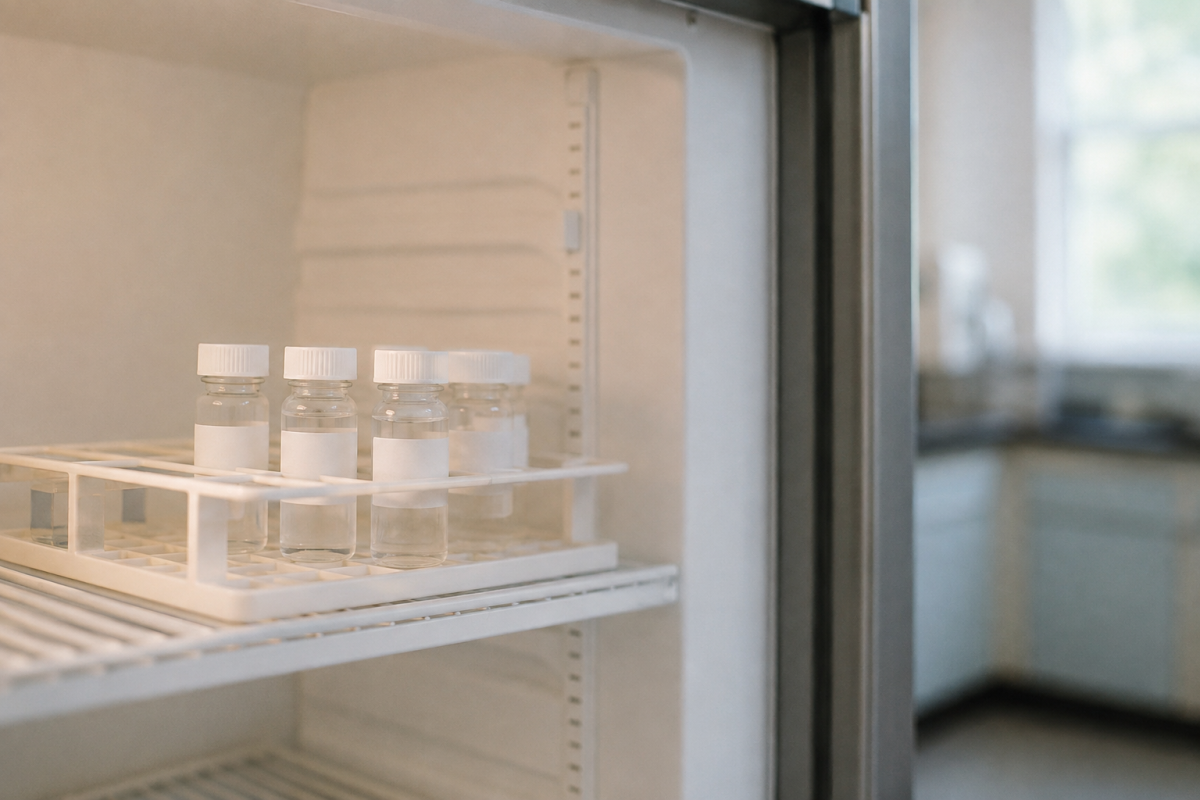
Upon receiving a lyophilized peptide, verify the seal integrity and store immediately at the recommended temperature. Most suppliers specify -20°C for long-term storage. For peptides that will be used within a few weeks, storage at 2-8°C (refrigerator temperature) is generally acceptable, though -20°C remains preferable.
Reconstitution is the step where most storage errors occur. The choice of solvent is critical and depends on the peptide's physicochemical properties. Sterile water is appropriate for many peptides, but hydrophobic sequences may require dilute acetic acid, DMSO, or other organic co-solvents. Always refer to the supplier's recommendations for specific reconstitution guidelines.
Once reconstituted, peptide stability decreases significantly. Aqueous peptide solutions should be aliquoted into single-use volumes immediately after reconstitution to avoid repeated freeze-thaw cycles. Each freeze-thaw cycle can cause aggregation, oxidation, and hydrolysis, reducing both purity and activity.
Aliquot volumes should be calculated based on your experimental protocol to minimize waste. Use low-binding microcentrifuge tubes (polypropylene) to reduce peptide adsorption to container surfaces — this is particularly important for dilute solutions, where surface adsorption can represent a significant fraction of the total peptide.
For reconstituted peptides stored at -20°C, stability varies by sequence but is generally measured in weeks to months. Peptides containing methionine, cysteine, or tryptophan residues are particularly susceptible to oxidation and may require storage under inert gas (nitrogen or argon) for maximum stability.
Working solutions at room temperature should be used within the same day whenever possible. Extended incubation at ambient temperature accelerates degradation, particularly for peptides prone to deamidation (asparagine and glutamine residues) or diketopiperazine formation (N-terminal sequences).
Documentation is an essential but often neglected aspect of peptide storage. Record the date of receipt, lot number, reconstitution date, solvent used, concentration, storage temperature, and number of freeze-thaw cycles for each aliquot. This information is critical for troubleshooting unexpected experimental results.
A simple but effective rule of thumb: treat peptides like biologics. If you would hesitate to leave an antibody or enzyme on the bench overnight, apply the same caution to your peptides. The investment in proper storage practices pays immediate dividends in data quality and experimental reproducibility.