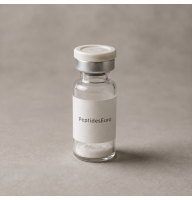
Body Protection Compound-157, commonly known as BPC-157, has emerged as one of the most extensively researched peptides in modern biomedical science. Derived from a naturally occurring protein found in human gastric juice, this 15-amino-acid peptide has generated remarkable interest across multiple research disciplines.
Over the past decade, more than 300 peer-reviewed studies have been published examining the biological activity of BPC-157. What makes this peptide unusual is the breadth of its observed effects — spanning tissue repair, angiogenesis, nitric oxide modulation, and cytoprotection. Few compounds in peptide research have demonstrated such a wide range of potential applications.
The origins of BPC-157 research trace back to the early 1990s at the University of Zagreb, where Dr. Predrag Sikirić and his team first isolated and characterized the compound. Their initial studies focused on gastric protection, observing that BPC-157 demonstrated significant cytoprotective properties in models of gastric ulceration. These early findings set the stage for decades of subsequent research.
One of the most consistently reported effects of BPC-157 is its apparent ability to accelerate wound healing. Studies in animal models have shown faster closure of skin wounds, improved healing of severed tendons, and enhanced recovery from muscle crush injuries. The mechanism appears to involve upregulation of growth factor expression, particularly vascular endothelial growth factor (VEGF) and fibroblast growth factor (FGF).
Angiogenesis — the formation of new blood vessels — is another area where BPC-157 has shown notable activity. Multiple studies have demonstrated that the peptide promotes the formation of new vasculature in damaged tissues, which is believed to be a key mechanism underlying its tissue-repair properties. This pro-angiogenic effect has been documented in models of ischemic injury, tendon damage, and muscle repair.
The neuroprotective potential of BPC-157 has attracted growing attention. Research has explored its effects in models of traumatic brain injury, peripheral nerve damage, and spinal cord injury. Several studies have reported improved functional recovery and reduced neuronal damage following BPC-157 administration, though the precise mechanisms remain under investigation.
Perhaps most intriguing is the emerging research on BPC-157's interaction with the nitric oxide (NO) system. The peptide appears to modulate NO synthesis in a context-dependent manner — increasing NO production in some conditions while reducing it in others. This bidirectional activity may help explain the compound's diverse biological effects and has led researchers to describe it as a 'stable gastric pentadecapeptide' with systemic regulatory properties.
Despite the volume of research, it's important to note that the vast majority of BPC-157 studies have been conducted in animal models, primarily rodents. Human clinical trials remain limited, and the translation of animal findings to human applications requires careful scientific scrutiny. The peptide research community continues to call for well-designed clinical studies to validate the preclinical observations.
The regulatory landscape around BPC-157 has also evolved significantly. In several jurisdictions, the compound occupies a gray area between research chemical and pharmaceutical agent, leading to ongoing discussions about appropriate classification and access. Researchers and clinicians alike are watching regulatory developments closely.
What sets BPC-157 apart in the peptide landscape is not any single finding, but the consistency and reproducibility of results across hundreds of independent studies. Whether this translates into clinical utility for human patients remains the central question — and one that the research community is actively working to answer.